Newsletter
Subscribe to our newsletter and receive the newest and best locations directly in your inbox!

Parking, Access and Load-In: The Unseen Details That Make a Filming Location Work
When a production team chooses a filming location, the first questions are usually creative. Does the space fit the brief? Does the architecture support the story? Is the light right? Does the location give the campaign, film or photo shoot the atmosphere it needs?
But once the crew arrives, another set of questions becomes just as important.
Where can the vans stop? How does the equipment enter the property? Is there a lift? Are there stairs? Can lighting, camera, art department, wardrobe and catering move efficiently without blocking each other?
A filming location may look perfect in photographs, but if access is complicated, the production day can quickly become slower, more expensive and more stressful. For this reason, parking, load-in and internal movement should always be considered during location scouting and the technical recce.
At Spot Locations, we evaluate properties not only for how they look on camera, but also for how they function as real production environments.
Why Access Matters in Location Scouting
Access is one of the least glamorous parts of choosing a filming location, but it has a direct impact on the rhythm of the shoot.
A production may arrive with camera equipment, lighting gear, grip material, props, styling rails, makeup kits, catering supplies and sometimes generators, furniture or set dressing. Even a small commercial shoot can involve more movement than a property owner might expect.
If the entrance is narrow, the lift is small, the staircase is difficult or the nearest loading point is far away, every department needs more time. What looks like a minor inconvenience during a quick visit can become a repeated delay throughout the day.
This is why a professional location recce should assess the route from the street to the shooting area. The question is not simply whether the crew can enter. It is whether the crew can enter efficiently, safely and without disturbing the property or surrounding area more than necessary.
Parking, Loading Zones and Vehicle Access for Filming Locations
For filming locations in Barcelona, Madrid and other urban areas in Spain, parking is often one of the first practical challenges.
Production vans may need to unload close to the property, especially when the shoot involves heavy lighting equipment, camera cases, props or wardrobe. If the nearest legal stopping point is several streets away, the crew may lose valuable time before the shoot has even started.
In city centres, historic neighbourhoods or residential streets, access can be affected by narrow roads, pedestrian areas, delivery schedules, traffic restrictions, street works, market days or local events.
This does not mean that urban locations are unsuitable for production. Barcelona apartments, rooftops, offices, hotels and restaurants can offer exceptional visual value. It simply means that the access plan should be realistic.
During the scouting process, a location agency should help the production team understand where vehicles can stop, how long unloading may take and whether additional permissions or coordination may be needed.
For some shoots, this may involve checking nearby loading bays, private parking, service entrances, building rules or public-road filming requirements. These details are not always visible in location photos, but they can strongly influence how smoothly the production day runs.
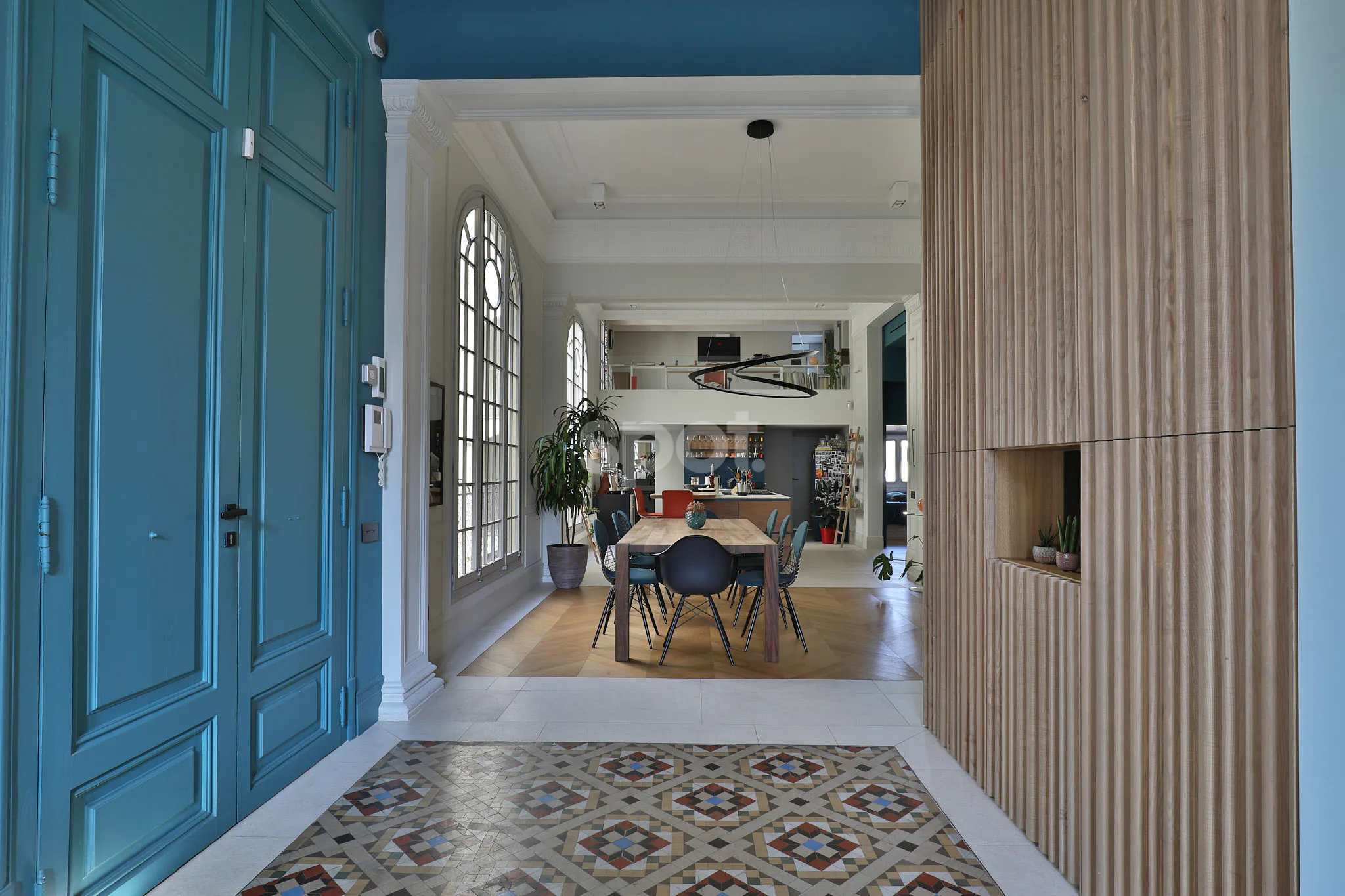
Lifts, Stairs and Internal Movement
Once the equipment reaches the building, the next question is how it moves inside.
A property on a higher floor may be visually perfect, but the practical conditions depend on the lift size, staircase width, doorways, corridors and distance between the entrance and the shooting area.
Small lifts can create delays if equipment needs to be moved in several trips. Older buildings may have beautiful character but narrower staircases. Contemporary villas may offer generous interiors but involve exterior steps, gravel paths, garden levels or long distances between parking and the main house.
For commercial shoots, fashion editorials, interviews and audiovisual productions, these details affect the whole crew. Lighting may need more setup time. Art department may need extra hands. Wardrobe and makeup may require a separate area. Sound, camera and production teams need clear routes that do not constantly cross each other.
Good internal movement helps the production feel calmer and more organised. Poor internal movement creates friction, even in a beautiful location.
A useful technical recce should therefore look at the full working route: entrance, unloading point, lift or stairs, corridors, staging area, shooting space, holding area and exit.
Protecting the Property During Load-In
Access is not only about speed. It is also about protecting the location.
When equipment moves through a home, office, hotel or restaurant, the production team must consider floors, walls, doors, furniture, plants, artwork and delicate surfaces. Heavy cases, metal stands, rails and lighting equipment can cause accidental damage if the load-in is rushed or poorly organised.
This is especially important in private houses, design properties, historical apartments and high-end villas, where the materials may be more delicate or difficult to repair.
Professional productions often use floor protection, corner protection, mats, covers and clearly defined movement routes. The aim is simple: allow the crew to work properly while respecting the property.
For property owners, this is one of the reasons why working with an experienced location agency matters. The location is not treated as an empty set, but as a real space that must be returned in the same condition in which it was received.
Neighbours, Building Rules and Timing
A filming location does not exist in isolation. It is part of a building, street or community.
Even when the shoot takes place entirely inside a private property, the arrival of vans, crew members and equipment can affect neighbours, concierge staff, residents or nearby businesses.
In apartment buildings, there may be rules about lift use, working hours, noise, common areas or loading through the main entrance. In residential streets, early-morning arrivals or repeated unloading can attract attention if they are not handled carefully.
Planning helps avoid unnecessary tension.
A location agency familiar with production logistics in Spain can help identify questions that should be clarified before the shoot: who needs to be informed, whether the concierge should be briefed, whether common areas need protection, and whether certain times of day should be avoided.
These are small details, but they often make a big difference to how smoothly the filming location works on the day.
Matching Access to the Type of Production
Not every production has the same access requirements.
A small photography shoot with a compact team may need only light equipment and minimal parking. A commercial shoot with multiple departments may require several vehicles, more loading time, wardrobe space, catering, lighting setups and a larger holding area.
A car commercial, product shoot, furniture campaign or set build may have very different logistical needs from an interview, lifestyle shoot or social media production.
This is why access should always be assessed in relation to the specific project. The same location may be ideal for one production and unsuitable for another, depending on the size of the crew, the amount of equipment and the intended use of the space.
The earlier these requirements are shared, the easier it is to match the creative brief with a filming location that can genuinely support the production.
A Practical Approach to Filming Locations
The best filming locations are not only beautiful. They are workable.
Strong architecture, natural light and visual atmosphere are essential, but access, parking and load-in often determine whether the production can move efficiently once the crew arrives.
By checking these details during location scouting and the technical recce, production teams can reduce delays, protect the property and create better working conditions for everyone involved.
At Spot Locations, we look at locations through both creative and practical eyes. From city apartments and rooftops to villas, offices, restaurants, industrial spaces and country houses, our role as a location agency is to support location scouting, production logistics and the search for filming locations in Barcelona, Catalonia and across Spain that support the visual brief and the real logistics of the shoot.
Ready to start your next production?
- Explore our location page to browse our location archive.
- Stay updated on the latest production updates and industry news on our blog.
- Contact us at Spot Locations to discuss your 2026 project with a professional location scout or to request a custom reference deck.
Spot Locations: The leading location agency for seamless audiovisual productions in Spain and Barcelona.
This website uses its own cookies and third-party cookies for strictly functional purposes, allowing navigation on the website, as well as for analytical purposes, based on a profile prepared from your browsing habits (e.g. pages visited), to optimize the web and to be able to assess the opinions of the products acquired by the users.